

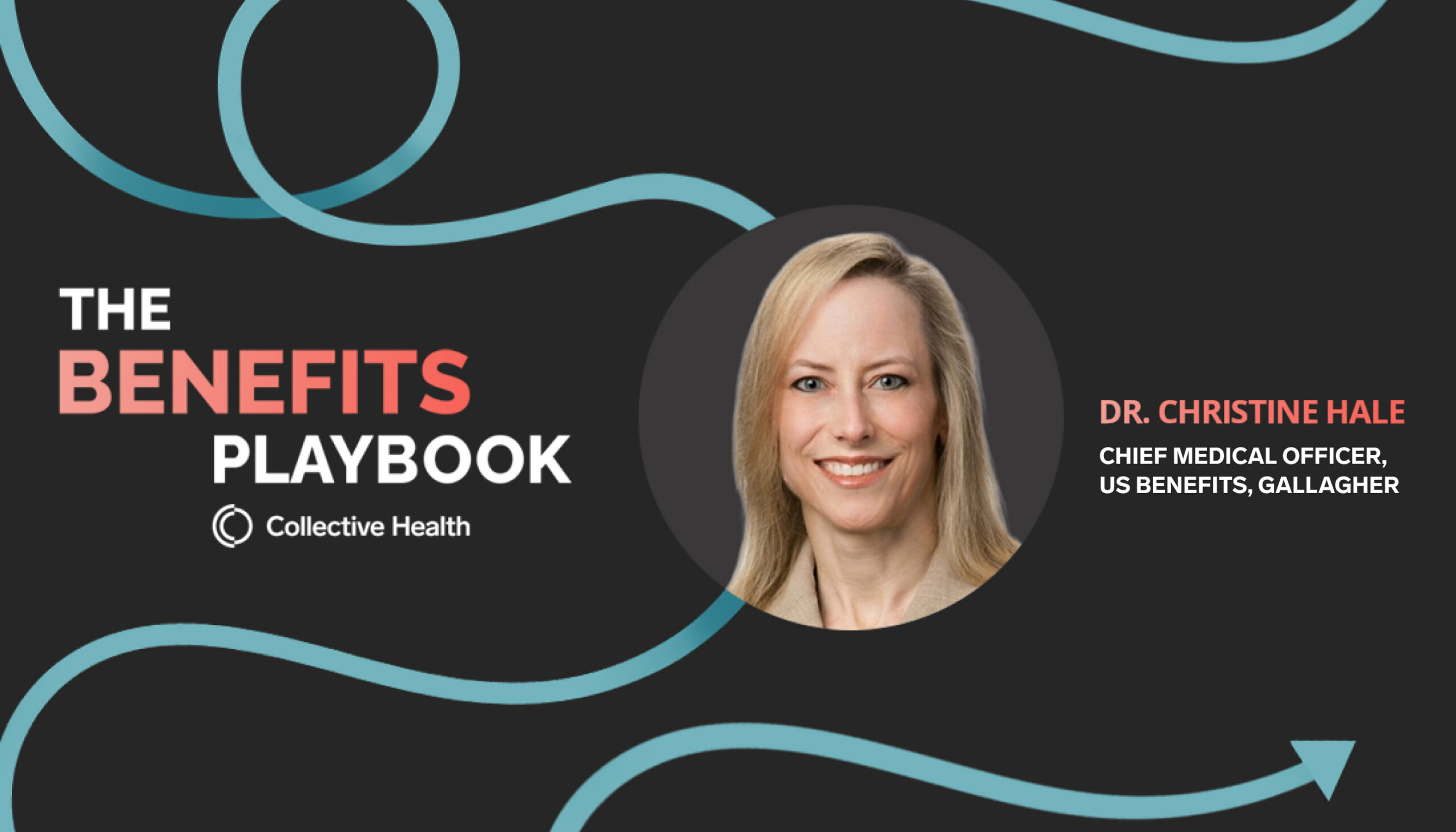
Most employers meet a high-cost claim the same way: a number lands, it’s enormous, and the working assumption is bad luck. Dr. Christine Hale starts somewhere else. The $50,000 threshold that once defined a high-cost claimant is now, in her words, table stakes — nearly every plan has autoimmune cases on specialty drugs above it. The claims worth real attention are usually hiding in details no one is reading.
Across the conversation, Dr. Hale separates two very different threats. There are the “lightning strikes” — the multi-million-dollar gene therapy or the months-long NICU stay — which most plans can insure against. Then there’s the rising tide: chronic cases that never resolve. Cancer was once “basically a binary disease,” she notes, and patients can now live more than a decade on suppressive therapy — a clinical triumph the insurance model was never built to fund. She walks through where the system quietly fails: a member misdiagnosed with MS and kept on a $300,000-a-year drug that did nothing, a $250,000 knee replacement concealing a $163,000 line item, a $2.1M gene therapy running alongside a maintenance drug no one stopped because medical and pharmacy data never met.
For benefits leaders and consultants, the throughline is uncomfortable but actionable: you cannot manage what you cannot see, and you cannot see it without integrated data and partners willing to do more than hand over a report. Dr. Hale’s advice is almost disarmingly simple — ask better questions, and refuse to accept “sorry for your luck.” The employers pulling ahead are the ones treating cost as a problem to interrogate rather than a bill to absorb.
Highlights from the episode include:
- The shift from “lightning strike” claims to the rising tide of ongoing cases
- Why the right diagnosis is the highest-leverage cost lever in a plan
- The case for unifying medical and pharmacy data at the member level
- Centers of Distinction vs. Centers of Excellence
- A $250,000 knee replacement and the $163,000 line item buried inside it
🎧 Listen to the full episode above, or find it on YouTube, Apple Podcasts, Spotify, or your favorite podcast platform.
📄 Read the episode transcript here.